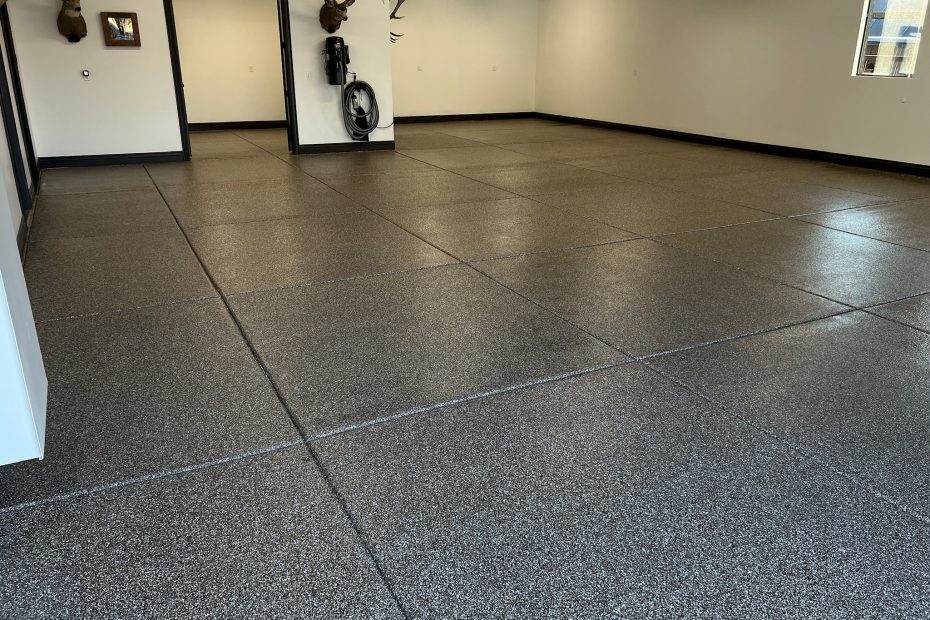
What One Chester Winter Takes Out of Your Slab
Brine off your tires plus a Pennsylvania temperature swing is a two-part attack: the salt soaks into open concrete, then the freeze pries it apart from inside. A coating only answers that if the slab is repaired and profiled first. Call (445) 444-2879 or request the quote.
Nobody watches a garage floor fail. It happens in slow motion across four or five Februaries, and you notice it the spring you finally sweep out the corner and a handful of the surface comes up with the broom. By then people usually assume the concrete was poor to begin with. Almost always it was fine. What it never had was anything on top of it, and around here that is the entire story. Here is the sequence, in order, and where a coating actually interrupts it.
The brine gets a ride home before you do
Salt does not arrive on a garage floor by weather. It arrives by vehicle. Road crews treat the routes ahead of a storm, the solution stays liquid on the pavement, and your tires and wheel wells carry a film of it up the driveway and park it inside. That is why the first eight or ten feet past the door always look worse than the back of the bay. It is where the drip lands.
Uncoated concrete is not a solid the way people picture it. It is a matrix of pores, and it wicks liquid the same way a sponge does. The brine goes down into that structure and stays there long after the visible puddle has evaporated, because the water leaves and the salt does not. What you sweep up in March is a residue of a whole season of deliveries, and the part you cannot sweep up is already sitting a quarter inch deep in the slab.
Chloride in the pore structure is corrosive company for anything steel underneath, and it also changes how the concrete handles the next part. Every additional winter compounds what the last one left behind. That is why an eight-year-old slab and a thirty-year-old slab in the same block can look like completely different materials.
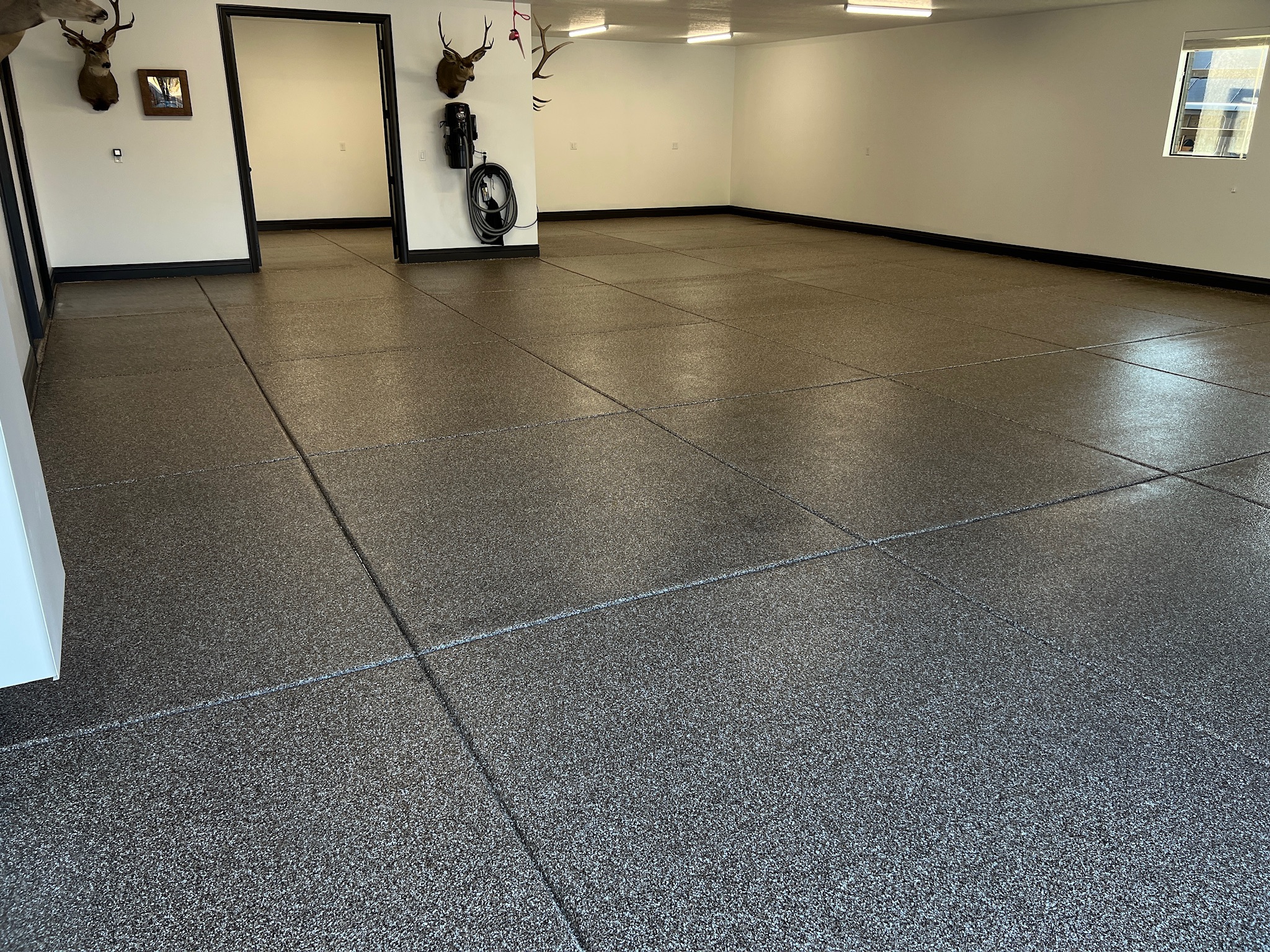
Then the thermometer does the demolition
Salt loads the gun. Temperature pulls the trigger. A Delaware County February hands you sun in the afternoon and a hard freeze by ten at night, over and over, sometimes twenty or thirty times in a single month. Every one of those cycles is a small mechanical event inside your floor.
Water that soaked into the pores expands as it turns to ice. It has nowhere to go, so it pushes outward on the concrete around it. Thaw, and the space it made is slightly larger than it was, which means more water fits next time. Repeat that a few dozen times and a hairline you could barely see becomes a crack with width to it, and the surface layer between the cracks starts letting go in coin-sized flakes. That is spalling, and it is not a cosmetic problem: once the top skin is gone, the exposed layer underneath is more porous than what it replaced, so the next winter runs faster than the last.
The saltier the water, the more aggressive that cycle gets, which is why the damage clusters in the tire path rather than spreading evenly. Two feet of a Chester garage can be shot while the rest of the room still looks new.
Repair first, or you are coating a problem
This is where the job either gets done or gets postponed at your expense. A coating laid over a cracked, spalled slab bridges nothing. The crack is still moving underneath, the freeze still has a channel to work in, and within a season or two the line reappears straight through your new floor.
So every crack gets chased open with a blade, cleaned out, and packed with a structural polymer that bonds to both faces. Not surface caulk, which lasts about one winter. Pitted and crumbling areas, especially the edge at the door opening where the plow spray hits, get rebuilt back to a flat plane. Control joints are a separate matter and stay respected rather than filled solid, because those are engineered movement points and the slab needs them.
Then the whole floor gets diamond ground. That does two things at once: it takes off the contaminated top skin along with any old sealer or floor paint, and it leaves a uniform profile the primer can key into. Grinding is the reason a coating stays down. Anything skipped here shows up later.
What the finished system is actually doing
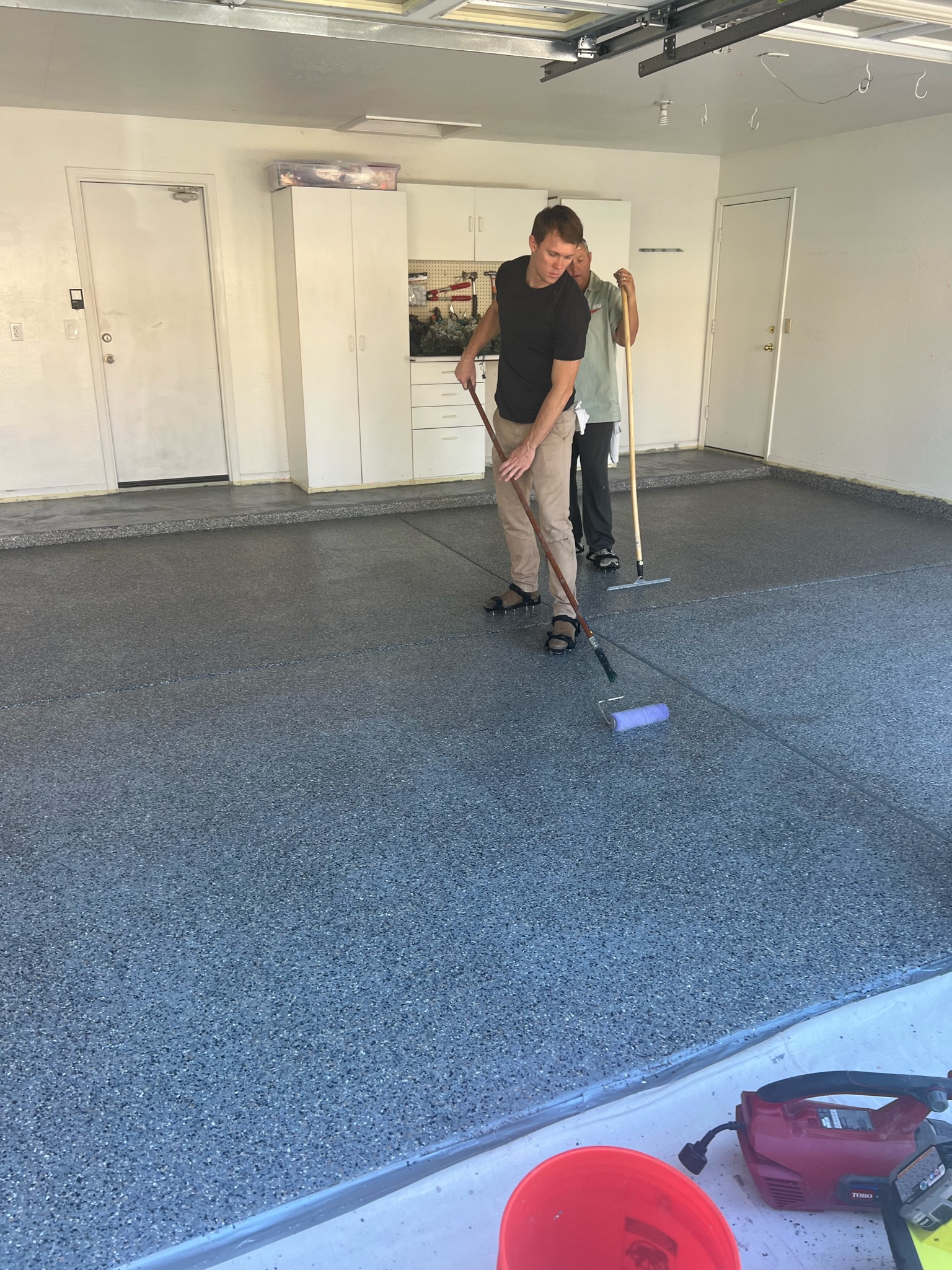
Once the slab is sound, the build is straightforward and each layer has one job. A penetrating primer keys into the fresh profile and glues everything above it to the concrete. A pigmented epoxy base carries the color and the body. Vinyl chip goes into that base while it is still open, thrown until the surface will not take another handful, which is what gives you both the texture underfoot and a wear layer of consistent thickness. Then the clear polyaspartic goes over the top.
That top layer is the one facing your winter. It is a closed film, so brine sits on the surface instead of soaking in, and a mop or a hose in February takes a whole season of it off in one pass. It stays flexible through cold rather than going brittle, and it is rated for the other half of the year, when a car comes home with tires hot enough to grab a soft coating and peel it off in the shape of the tread.
The pieces are described in more detail on our Chester garage floor coatings page, and finished bays are worth a look in the gallery before you pick a direction.
Timing the work around a Pennsylvania calendar
People ask whether they have to wait for spring, and the answer is usually no. An enclosed Chester garage holds enough heat, and we bring heat when it does not, so slab temperature is manageable through most of the winter. What we will not do is start on concrete that is still wet from snowmelt off the tires. Give it a day of drying and the schedule holds.
The honest constraint is cure time, not workability. Cold concrete cures slower than warm concrete. You can walk on a finished floor the day after the clear goes down in almost any season, but a January install may want an extra day before a vehicle comes back in, because a tire parked on a coating that has not reached final hardness leaves a mark you cannot buff out.
You get those dates for your floor, at your temperature, in writing before anything is scheduled. Not a brochure number that assumes a heated shop in June. If the timeline does not work for your household, we would rather move the date than hand you a floor that got rushed.
Questions we get about salt and cold
Can you coat a slab that already has spalling and cracks in it?
Usually yes, and that is most of what we do. Cracks are routed and packed, spalled areas rebuilt flat, then the whole floor is ground to one profile. What matters is whether the concrete underneath is still structurally sound. If a section is too far gone to justify coating, you hear that during the walkthrough rather than after a deposit.
Do I need to rinse the salt off during the winter?
It helps but it is not urgent. On a coated floor the brine sits on the surface with nothing to soak into, so it is housekeeping instead of damage. A mop when the white crust builds up, and a full rinse when the weather breaks, handles a Chester winter. On bare concrete the same salt would be halfway into the slab already.
Will the coating crack again where the old crack was?
Not from the freeze, once the crack has been opened and packed solid with structural polymer, because the water that was driving the cycle no longer has a channel. What can still telegraph through is a control joint, which is why we keep those open and honor them rather than burying them under resin.
Get Ahead of This Winter
We read the concrete, price the repairs as their own line, and put the whole scope on paper before anything starts. Nothing due to hold the visit.
Reserve a Walkthrough (445) 444-2879