Chester Garage Floor Coatings
A full coating system for the rowhome, twin, and detached garages around Chester. We take the slab down to bare concrete, fix what winter has been doing to it, and lay a flake floor with a topcoat that shrugs off brine and hot tires.
Winter is what wrecks these slabs.
Ask anybody who parks indoors around here what their concrete looked like when they bought the house versus what it looks like now. The difference is salt. Crews treat the roads from the waterfront up through the neighborhoods every time a storm comes through, your tires pick that brine up, and you drive it straight onto your own floor where it sits in a puddle and soaks in.
Then the temperature does what it does in a Pennsylvania February. Warm afternoon, hard freeze overnight, repeat for weeks. Water that worked its way into a hairline crack expands when it turns to ice and pushes the crack a little wider each cycle. Come March that hairline is a real crack, the surface around it is flaking off in coin-sized chips, and the first few feet inside the door where the tires drip look worse than the rest of the floor combined.
A coating stops the cycle by sealing the slab so water never gets in to begin with. That only works if the concrete underneath is sound first, which is why our prep runs longer than the coating itself. See what these floors look like when they are finished in our project gallery.
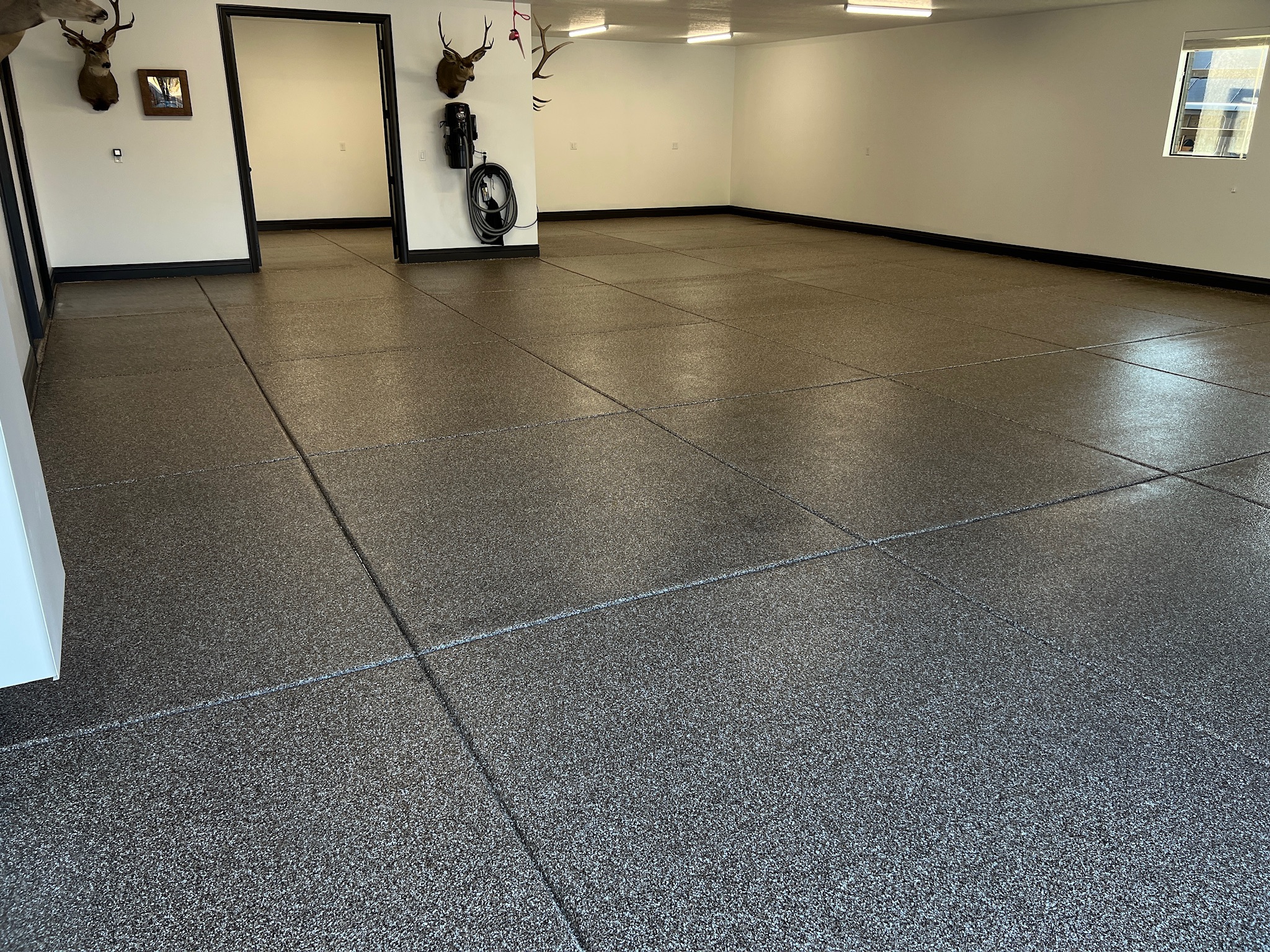 Saw-cut joints stay visible through the flake, which is deliberate: honoring the joints is what keeps the slab from telegraphing a crack up through a new floor.
Two days on site, and here is how they go.
The schedule below is what a standard single or two-car Chester garage looks like. Bigger floors and heavy repair work add time, and if that is your situation you will hear it during the walkthrough rather than on day two.
Morning of day one: clear out and read the concrete
Everything comes out to the driveway. Then a moisture reading, an oil and contamination check, and a slow pass over the slab with a light held low so every crack, low spot, and soft edge shows itself. What that walk turns up is what goes in the written scope.
Diamond grinding, wall to wall
Mechanical grinding across the entire floor, hand-ground tight to the walls and out through the door opening. Old sealer, old floor paint, and whatever kit somebody rolled on years ago all come off in this step. We do not acid etch, here or anywhere.
Cracks routed, spalls rebuilt, joints honored
Every crack gets chased open and packed with structural polymer. Pitted areas and the crumbling edge at the door get built back flat. Control joints are respected rather than filled solid, so the slab keeps moving where it is supposed to.
Afternoon of day one: primer and base
Penetrating primer keyed into the fresh profile, then the pigmented epoxy base laid at full thickness. On damp older slabs the primer changes to a moisture-mitigating spec, which is decided by the reading rather than by preference.
Flake broadcast to refusal
Vinyl flake thrown into the wet base until it will not accept any more. Next morning the loose flake is scraped back and vacuumed off, which is what gives you an even texture instead of bald patches and drifts.
Day two: polyaspartic topcoat and walkthrough
The wear layer goes down over the flake. Then we walk the floor with you, hand over the cure schedule in plain language, and leave the warranty in writing. Your things go back in when the slab is ready for them, not before.
Questions about your own garage before anything is scheduled? Ring (445) 444-2879 or send a few photos through our contact form.
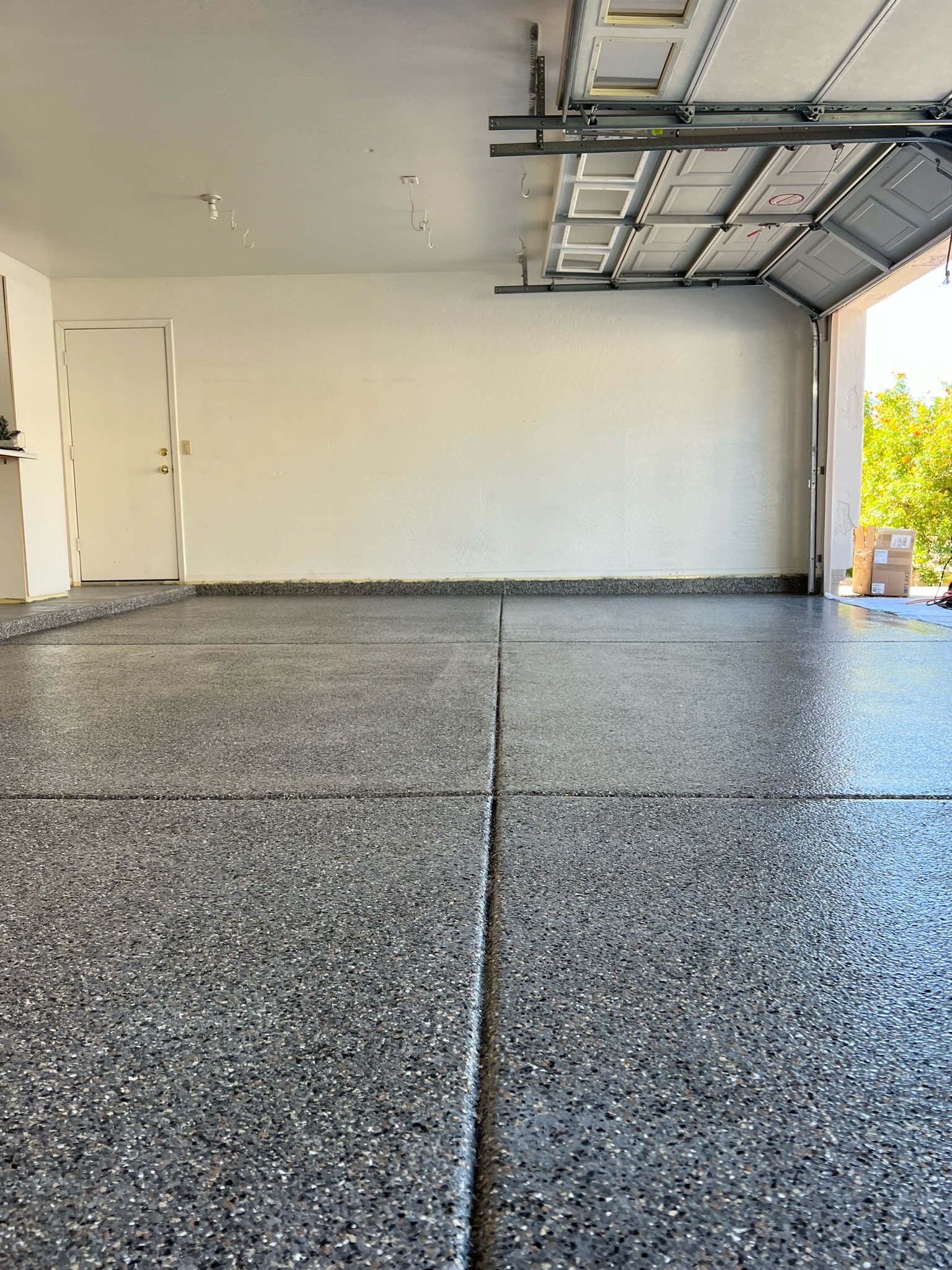 Shot low so you can see the flake body and the coved base band, which is the detail that lets you hose a floor out instead of scrubbing a seam.
Older slabs, moisture, and the detached bay.
Plenty of garages in Chester sit behind the house rather than under it, standing on their own with a slab poured straight onto dirt back when nobody was putting plastic down first. Those floors run cool and they run damp, and moisture pushing up from the ground is the reason more coatings fail than any other single cause. It does not matter how good the material is if it is bonded to a slab that is quietly sweating underneath it.
So the moisture reading happens before we price the job, not after we have started it. If the number is high, the scope calls for a mitigating primer and you see that line before you agree to anything. If the number is fine, we say so and you do not pay for something you did not need. What we will not do is lay a standard system over a wet slab and let you find out about it next summer.
A tell worth knowing: if the concrete feels cool and faintly tacky under your palm on a humid day, or if boxes stored on the floor come up with damp bottoms, mention it when you call. It changes what we bring in the van.
Narrow bays, tight blocks, and July heat.
Chester garages tend to be tight. A single bay behind a twin, a shared drive with barely enough room to swing a door, a detached garage off an alley that a full-size pickup fills corner to corner. That shape changes the work: hand grinding along the walls instead of riding a big machine, and coordinating with you so the driveway is clear for the two days your things are sitting out there. It also changes what the floor has to survive, because in a narrow bay every drip lands in the same eighteen inches.
Summer is the other test. Park a car that has been sitting in traffic and the tires come in hot, and hot rubber pressed against a soft coating will lift it right off the slab in a patch the shape of the tread. That failure has a name in this trade, hot-tire pickup, and it is the single most common way a store-bought garage kit dies. The polyaspartic wear layer we finish with is rated for it, so the floor under your car in July is the same floor you had in April.
Shop floors, fleet bays, and anything carrying heavier traffic get a thicker version of the same buildup. That work lives on the Chester commercial epoxy page, and the prep story behind all of it is on our floor prep page.
Living with the floor afterward.
Three numbers matter once we drive away, and none of them are negotiable by wishful thinking. You can walk on the floor the day after the topcoat goes down. You can set boxes, shelving, and the deep freezer back in around the same time. You cannot put a vehicle on it for seventy-two hours, because the topcoat is still building its final hardness and a tire parked on a green coating leaves a permanent mark for its trouble.
Cold weather stretches that window. A slab sitting at forty degrees cures slower than one at seventy, so a January job may need an extra day before the car comes home. We tell you which end of the range your job is on before we start, and we would rather give you the honest number than the one you want to hear and then apologize later.
Maintenance is genuinely nothing. Sweep it, mop it when the salt line builds up in February, and hose the whole thing out in spring if the coving lets you. No waxing, no resealing, no annual anything. Chip a spot moving something heavy and call us, because a flake floor spot-repairs cleanly and there is no reason to live with a mark. The warranty covers adhesion and finish in writing, and the crew that ground your slab is the crew that coated it.
Related Services
Flake is the finish most people land on for a garage, and it is what the system on this page is built around. If you want the poured look instead, start with metallic. If the bay takes real abuse, start with polyaspartic.
Frequently Asked Questions
My Chester garage is barely wider than the car. Can you still work in it?
Does the coating go up the wall or stop at the concrete?
What happens to the cracks already in my slab?
Do you acid etch, or is that just for older concrete?
Can this be done in December, or should I wait for spring?
How far into Chester do you come from Broomall?
Free garage floor quote in Chester.
Somebody comes out, measures the bay, takes a moisture reading, and writes the whole scope down before you decide anything. Twelve years of this work and two industry certifications behind every floor we hand back. No deposit to book the visit. Ring the shop, or send the details here and we will bring the written quote to you.
(445) 444-2879