The coating that holds its color outdoors
Chestnut Hill puts more concrete in the sun than most neighborhoods we work in: covered porches, side patios, walkway landings, garages with the door open all afternoon. Epoxy ambers in that light. Polyaspartic does not. That single piece of chemistry is why it goes down on most of the exterior slabs we coat up here.
Sunlight is the deciding factor
Ask any coating installer what fails first on an exterior slab and the honest answer is the color. A standard epoxy topcoat left in direct sun turns yellow, and it does it faster than most homeowners expect: a season or two on a south-facing porch, and the clean gray you picked has gone the shade of weak tea. Nobody is doing anything wrong. Epoxy resin simply is not UV-stable, and no amount of careful installation changes that.
Polyaspartic is built from a different resin family and holds its color under that same exposure. On a Chestnut Hill porch floor, a back patio off the kitchen, or the landing where a stone walk meets the house, that is the whole argument. We use polyaspartic outdoors because it is the material that stays looking like the day we finished it, and we say so plainly rather than selling you the cheaper product and hoping you do not notice in year three.
Fast cure gets the headlines. Color stability is why it belongs outside.
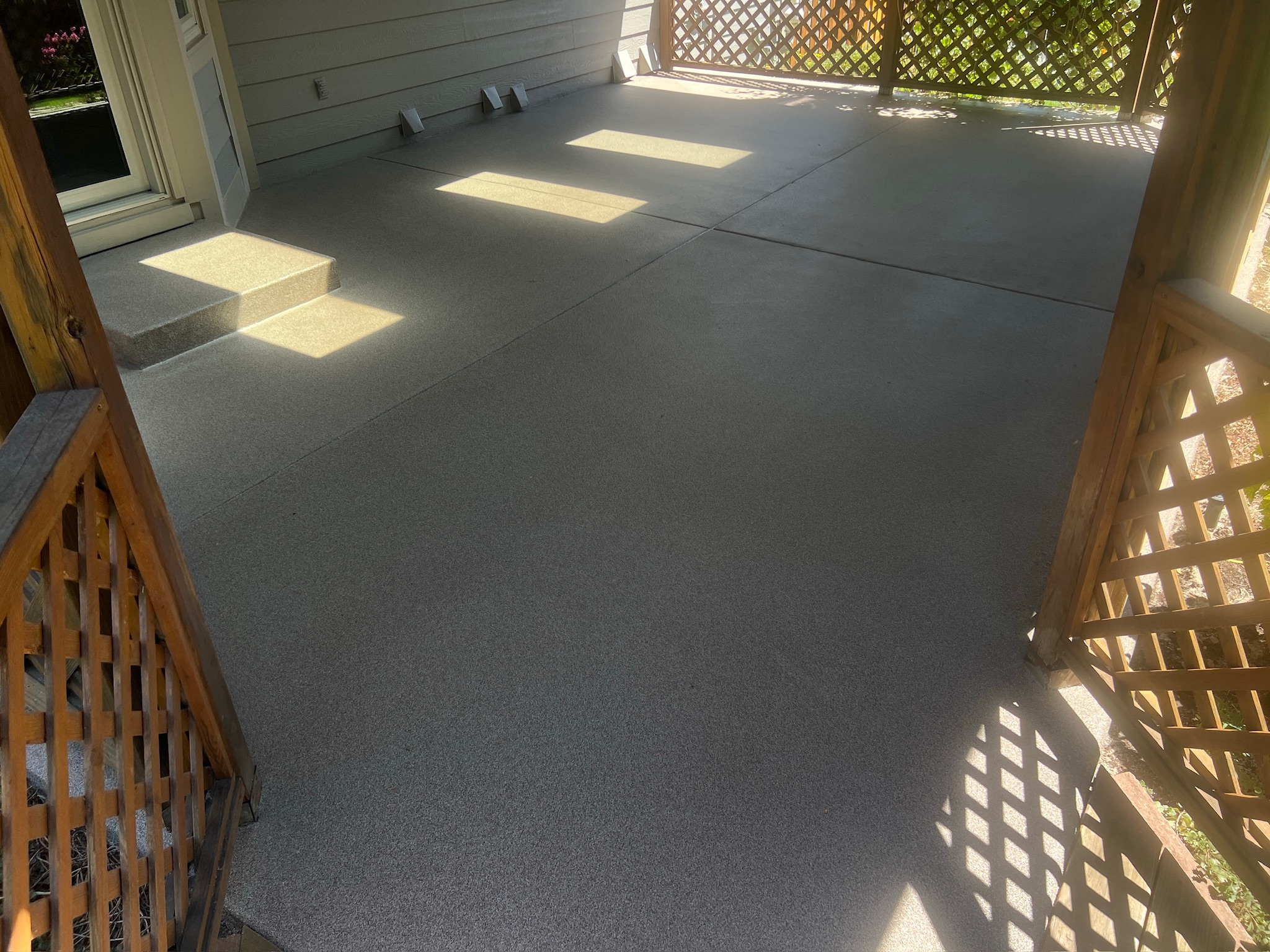 Coated porch floor under direct afternoon light, the exact exposure that ambers a standard epoxy topcoat.
Two more reasons it fits this neighborhood
The install season runs longer
Polyaspartic cures across a colder range than epoxy, which matters a great deal in Philadelphia. Epoxy on an unheated slab in November gets sluggish, and past a certain point it will not cure properly at all. Polyaspartic keeps working when the slab is cold, so a garage or a covered porch here can be coated later into the fall and started earlier in the spring. If you called us in October about a floor you assumed had to wait until May, this is usually the answer. We still read slab temperature and dew point the morning of, and we will move a date rather than force a pour that cures soft or streaked.
It takes the grit better
The Wissahickon schist that makes the walls and walks up here so handsome also sheds hard mineral grit. It gets tracked from the walk to the porch to the garage under everyone’s shoes, and it works like sandpaper underfoot. A polyaspartic wear layer is meaningfully harder than an epoxy surface and takes that abrasion without dulling into a scuffed traffic path down the middle of the floor. On entries and walkway landings, that abrasion resistance ends up mattering as much as the UV.
The garage does not have to sit empty
Plenty of houses here have a single detached garage down a narrow drive, and there is no second bay to shuffle cars into for four days. Polyaspartic can be ground, based, broadcast and topcoated in one day: walkable that evening, vehicles back the next. When the schedule is the real obstacle, this is what solves it.
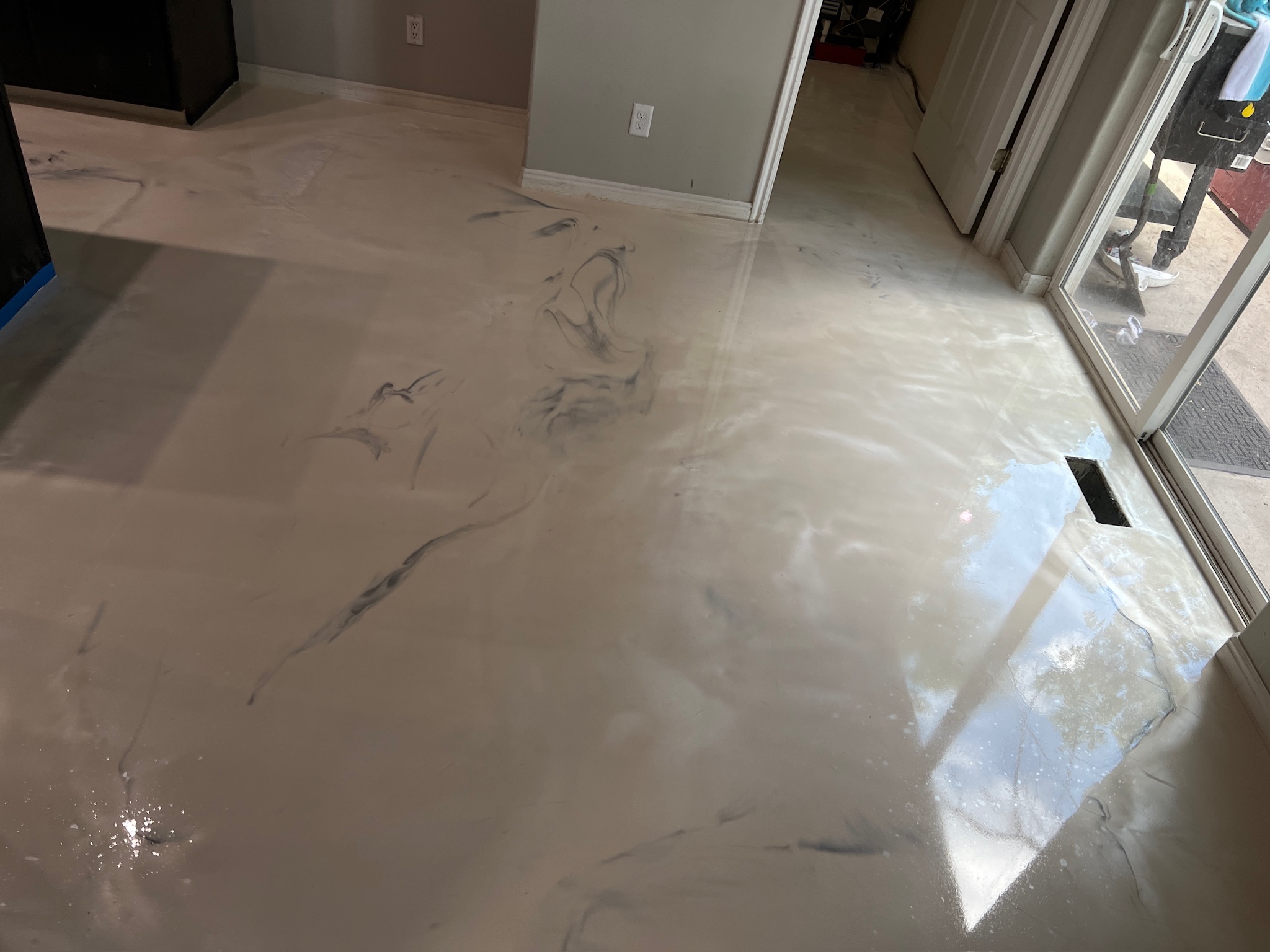 A finished interior floor. Out of the sun, a well-built epoxy system with a good topcoat is often the smarter buy.
When we tell you to skip it
Polyaspartic is not automatically the right answer, and any contractor who says otherwise is selling rather than advising. Indoors, out of daylight, a thick epoxy build with a proper topcoat is frequently the better value: it lays down heavier, fills a rough or pitted slab more generously, and the UV advantage you would be paying for does nothing in a basement. On a finished basement floor or an interior room, we will often steer you to the epoxy system and put the difference toward better prep.
Where the two meet is the pairing we use most. An epoxy base carries the build and the color, a full flake broadcast gives the floor its texture and hides everyday dirt, then a clear polyaspartic goes over the top as the wear and UV layer. That combination is behind most of the garage and porch floors in our portfolio, and it is why choosing polyaspartic never means settling for a plain gray slab.
Why the crew matters more with this material
Everything good about polyaspartic comes from how fast it sets, and that same speed is what ruins it in the wrong hands. The pot life is short and the material is temperature sensitive, so it starts curing whether or not the crew is ready for it. Get caught behind the material and you get lap lines where a wet edge went off early, dry spots, and a floor that starts lifting inside a season. Most of the bad polyaspartic work we get called to grind off failed for exactly that reason, not because of the product.
So we stage for the window. We size each section to the day’s temperature, mix in controlled batches, and keep the whole floor moving as one piece so the coating stays wet edge to wet edge and cures as a single surface. The prep is stricter than epoxy demands, not looser: diamond-grind to profile, repair the cracks and joints, moisture-test where vapor is a risk, all of it done before a single batch is mixed, because there is no fixing anything once the material is down. None of that discipline is visible in the finished floor. That is the point of it.
Questions we get in Chestnut Hill
Will a polyaspartic porch floor yellow in the sun?
Can you coat in cold weather in Philadelphia?
Is one day realistic for a garage?
Is polyaspartic always better than epoxy?
How does it hold up to grit tracked off stone walks?
Can I still have a flake floor?
Does the fast cure mean less prep?
Where we work up here
We cover Chestnut Hill and the surrounding Northwest Philadelphia blocks from the shop in Broomall, and we are on Germantown Avenue jobs regularly enough that scheduling a look is usually a matter of days rather than weeks.
Get a written quote for your floor
We come out, measure, look at the slab and the light it gets, and put a real scope in writing before anything gets ground. No deposit and no pressure. If plain epoxy is the smarter buy for your room, that is what the quote will say.
(445) 444-2879