In Bryn Mawr, the enemy of a basement floor coating is not the coating. It is the moisture moving up through an old stone-foundation slab. A coating installed without a proper moisture test and a vapor-tolerant system will bubble and peel within a year. We measure the slab first with a calcium chloride or relative humidity test, then match the system to the reading, breathable where it needs to breathe and sealed where it can be sealed.
Bryn Mawr has some of the oldest housing stock on the Main Line, and that shows up most in the basement. Many of these homes sit on fieldstone foundations with concrete slabs that were poured decades later, directly on soil, with no vapor barrier underneath. The result is a cool, sometimes damp lower level where moisture is constantly trying to move up through the concrete. That is the single biggest reason DIY and bargain basement coatings fail here. The coating is fine; the slab is pushing it off from below. Below is how we actually approach a Bryn Mawr basement so the finished floor lasts instead of blistering by next spring.
Why old estate slabs stay damp
Concrete looks solid, but it is porous. Water vapor in the soil beneath a slab is drawn upward through those pores by capillary action and vapor drive, a process that never stops. In a newer home a plastic vapor barrier under the slab blocks most of it. In an older Bryn Mawr estate, that barrier usually does not exist. Add a fieldstone perimeter foundation that can wick groundwater, a high water table on some of the older lots, and grading that has shifted over a century, and you get a slab that reads high on a moisture meter even when it looks bone dry on the surface. Paint or a big-box epoxy kit rolled straight onto that slab has no chance.
Moisture testing comes before anything else
We never quote a Bryn Mawr basement coating without testing the slab. There are two tests that actually tell us what is happening. A calcium chloride test measures the moisture vapor emission rate, how many pounds of moisture come through 1,000 square feet of slab over 24 hours. A relative humidity probe drilled into the slab reads the internal humidity of the concrete itself, which is the more reliable modern method. We often run both. The numbers decide the system. A slab reading 3 pounds and 75 percent internal RH gets a very different specification than one reading 12 pounds and 95 percent, and no honest installer can skip that step and still promise the floor will hold.
Breathable versus sealed, and why it matters
This is the decision that saves a Bryn Mawr basement floor. When a slab carries real vapor drive, you have two honest paths. The first is a vapor-mitigation primer, a dense moisture-tolerant epoxy engineered to bond to a damp slab and stop the vapor before it reaches the decorative coat, letting us build a fully sealed flake or metallic floor on top. The second is a breathable system that lets a modest amount of vapor pass without building the pressure that pops a sealed coating loose. A rigid, fully sealed coating slapped onto a high-moisture slab with no mitigation is the classic failure: the trapped vapor builds pressure under the film and lifts it in bubbles and sheets. We pick the path from the test numbers, not from a guess.
What a finished Bryn Mawr basement floor can be
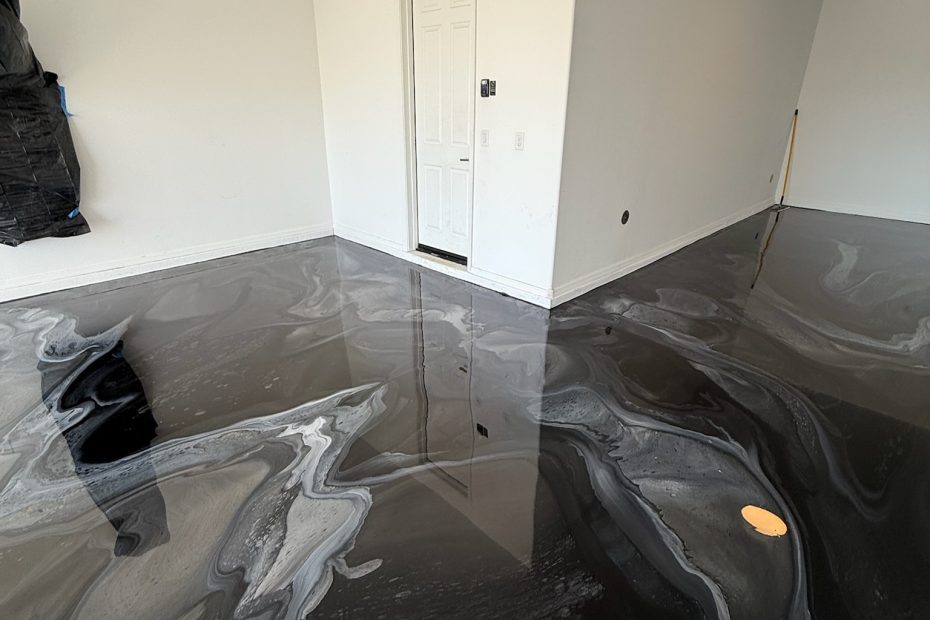
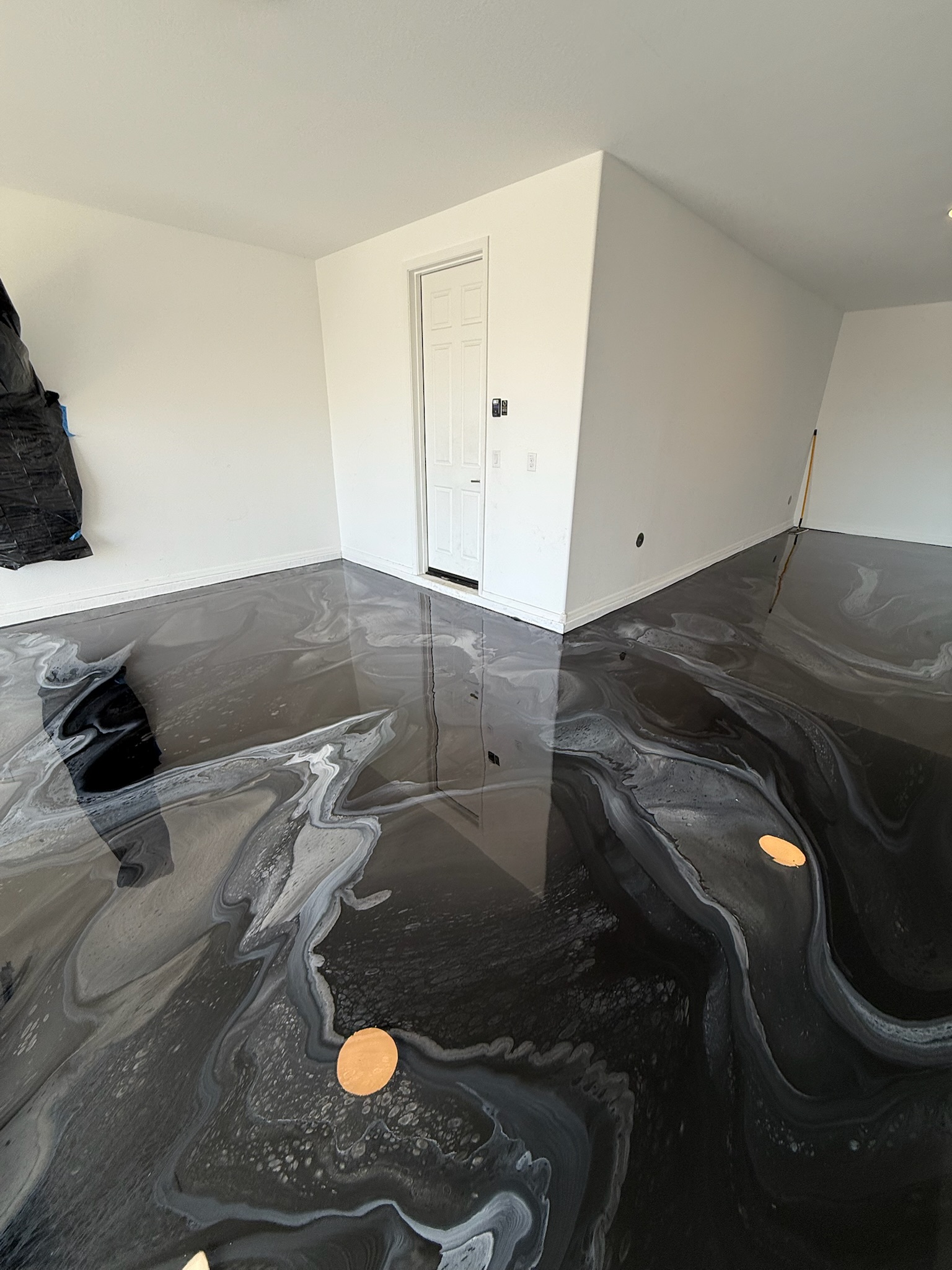
Once moisture is handled, the basement stops being a utility space and becomes usable square footage. A flake floor gives a durable, easy-to-clean surface for a home gym, a playroom, or a laundry and storage area, and it hides the imperfections of an old slab. A metallic pour turns a finished basement lounge, bar, or wine room into a showpiece, which many Bryn Mawr estates have the room for. Because we have already dealt with the vapor drive underneath, the decorative floor on top actually lasts. A sealed resin floor also makes the whole lower level easier to live with: it wipes clean, does not hold the musty smell that bare concrete and old carpet trap in a damp basement, and gives radiant reflected light back to a space that is usually short on windows. See finished basement floors in our gallery to picture the options for your own lower level.
Why DIY and bargain basement coatings fail here
A hardware-store epoxy kit assumes a clean, dry, sealed slab. Almost no old Bryn Mawr basement meets that assumption. The kit gets acid-etched (or barely prepped at all), rolled thin, and left to cure, and for a few months it looks fine. Then the seasonal moisture cycle kicks in, the vapor pressure builds, and the coating delaminates in patches. Now the homeowner is paying us to grind off a failed DIY floor, address the moisture properly, and start over, which costs more than doing it right once. The cheap quote from a general contractor who skips the moisture test lands in the same place. The test is the whole job on an old slab.
How we handle your basement
The process is straightforward and honest. We walk the basement, look at the foundation type and any signs of past water, and run a moisture test on the slab. We read the numbers, then specify a system, mitigation primer plus a sealed decorative floor, or a breathable build, whichever the slab calls for. We diamond-grind, repair cracks and any spalling, address the moisture layer, then install the decorative coat and topcoat. You get an itemized quote that shows the mitigation as its own line so you can see exactly what the slab required. If your Bryn Mawr basement is cool, damp, or has eaten a coating before, request a free quote or call (445) 444-2879 and we will test it properly.
Bryn Mawr Basement Floor Coating FAQ
Why did my old basement coating peel?
Almost always moisture. An old Bryn Mawr slab without a vapor barrier pushes water vapor up through the concrete. A coating installed with no moisture mitigation traps that vapor, which builds pressure and lifts the coating in bubbles and sheets.
What is a calcium chloride test?
It measures the moisture vapor emission rate of your slab, how many pounds of moisture pass through 1,000 square feet over 24 hours. The reading tells us whether the slab needs a mitigation primer or a breathable system.
Can you coat a damp basement floor at all?
Yes, but only after testing. A vapor-mitigation primer bonds to a damp slab and stops the vapor before a sealed decorative floor goes on top. High-moisture slabs sometimes call for a breathable system instead. The test decides.
Is a DIY basement epoxy kit worth it?
Rarely on an old Bryn Mawr slab. Kits assume a dry, sealed slab, which most older basements are not. They tend to fail within a year, and grinding off a failed floor to redo it properly costs more than doing it right once.
Can a finished basement floor look high-end?
Yes. Once the moisture is handled, we can install a flake floor for a gym or playroom or a metallic pour for a finished lounge, bar, or wine room. The decorative floor lasts because the vapor drive under it has already been addressed.
Why do so many old Bryn Mawr basements read as damp?
Most of the older homes here sit on fieldstone or rubble foundations poured long before anyone put a vapor barrier under a slab. Ground water moves through the stone and up through the floor as vapor year round, and it climbs in spring when the water table around the Main Line rises. The slab can feel dry to the hand and still be pushing several pounds of moisture through every day, which is exactly the condition that lifts a floor coating installed without testing. That is why we meter the slab before we quote a system rather than assuming a number.
Test the Slab Before You Coat It
Moisture testing, vapor-tolerant systems, and a basement floor that lasts across Bryn Mawr and the Main Line. The tru standard in coatings.
Free Quote (445) 444-2879